
The Silent Killer of Growth: Knowledge Walking Out
What is your MSP’s most valuable asset? Is it your RMM tool? Your client list? Your high margin contracts?
It is none of those things.
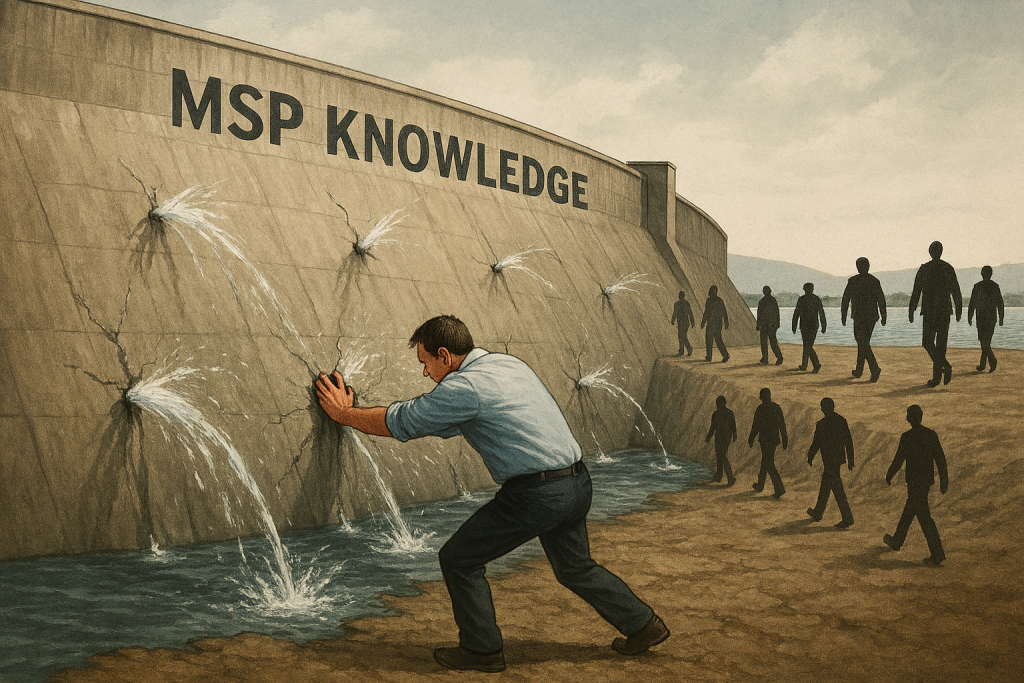
No, it’s actually the collective knowledge stored in your team’s minds. Every technician who knows a client’s quirks, every support ticket that’s been filed, every workaround in the system, it all lives in organizational memory. It is the project manager who remembers the workaround.
When a key employee leaves, they take that knowledge with them. Suddenly, simple support requests turn into long hours of troubleshooting. Critical processes are not documented, so your team is left guessing. Client relationships might weaken because no one else truly understands what’s been done or how to continue it.
This “brain drain” is a silent but deadly threat to MSP growth. If you’re not actively capturing and securing that knowledge, every departure is a step backward.
Why Documentation Is Your Best Defense
In Chapter 5 of Rewired MSP, I emphasize that in a scaling organization, “If it’s not in the PSA, it didn’t happen.” This simple rule underscores a fundamental truth: your team’s experience and process knowledge must be captured systematically.
Here’s why documentation is crucial:
- It keeps your business running smoothly when staff change or leave. Knowledge remains accessible, not reliant on individual memory.
- It enables onboarding of new staff quickly and consistently. You don’t have to start from scratch with every new hire or transfer.
- It maintains service quality at scale. Standard Operating Procedures (SOPs) turn complex tasks into repeatable steps, ensuring everyone delivers a predictable, high-quality experience.
- It protects your business from liability during audits, disputes, or security incidents. Good records are your safeguard in uncertain times.
Without documented processes, your organization remains fragile. It’s dependent solely on heroic effort and tribal knowledge. This is a recipe for chaos and growth bottlenecks.
Building a Resilient MSP with Secure Documentation
The antidote is clear: cultivate a culture of thorough, secure documentation. This is not just a best practice, it’s an investment in your future.
Every ticket, password, network diagram, and process step must be recorded in your PSA or knowledge management system. Schedule regular reviews to update SOPs. Assign responsibility to team members to maintain records, and hold everyone accountable.
This discipline transforms your organization from a fragile collection of heroes into a resilient, scalable machine. It empowers your team, reassures clients, and creates a legacy that can endure.
The Cost of Neglect
Many MSPs drift into the trap of assuming tribal knowledge is enough. But when someone leaves or retires, just a few poorly documented details can cause days of downtime or client dissatisfaction. The cost includes lost revenue, increased support costs, client churn, and damage to your reputation.
Good documentation acts as a safeguard and an accelerator. It prevents the knowledge sinkhole and turns chaos into consistency.
Build Your Systems Before You Scale
Want to learn how to embed these principles into your MSP? My new book, “Rewired MSP,“ dives deep into creating systems that work, scale, and last. It covers how to document processes, develop team accountability, and build a resilient organization from the ground up.
Don’t wait to become another MSP that loses its wits or its knowledge when key players leave. Build the systems that protect you today and support your growth tomorrow.
[Find out more about Rewired MSP and Start Building Resilient Systems Now]
