
Your MSP quoted you a price on hardware. You found the same brand online for less.
It looked like the same product. Same name on the box. Close enough on the specs.
You asked your MSP to match it. They said no.
That conversation happens constantly in the managed services world, and most clients walk away from it frustrated. This post is here to explain what is actually going on when that happens, and why the answer your MSP gave you is one of the most valuable things they will ever tell you.
The Procurement Value in One Paragraph
Good MSP procurement is not a markup exercise. It is lifecycle management: vendor vetting, compatibility, warranty registration, asset tracking, standardization, risk reduction, and accountability after the purchase. The cheaper online product may win the screenshot comparison. The vetted recommendation wins when something has to work, earn support, and keep working.
- Time: clients get a single accountable point of contact.
- Risk: clients avoid unsupported, discontinued, or untested products.
- Outcomes: purchasing decisions align with standards, supportability, and total cost of ownership.
What Your MSP Sees That You Do Not
Why Can’t Your MSP Match That Cheaper Online Price?
There is a reason Farmers Insurance built an entire brand around the phrase “We know a thing or two because we’ve seen a thing or two.”
Experience is not theoretical. MSPs build it by watching things fail, tracking which products create tickets, managing warranty claims that go nowhere, and answering the phone at 11pm when something stops working at the worst possible time.
When your MSP recommends a specific product at a specific price, that recommendation carries all of that history. It is not a catalog choice. It is a vetted decision based on real-world performance across real client environments.
The product you found online does not come with that context. Your MSP does.
When the Cheaper Option Costs More
Here is a version of a story that plays out regularly in the managed services world.
A client comes across a hardware product online at a noticeably lower price than what their MSP quoted. The brand is familiar, the specs look similar, and the savings seem real.
What the client does not see is why that product is available at that price.
Older models that have been discontinued frequently reappear in third-party warehouses and online marketplaces. They show up looking like deals. Sometimes vendors are simply clearing older inventory. Other times, manufacturers discontinued those products precisely because they had problems. Maybe the manufacturer discovered design flaws after release. In other cases, the product had higher-than-acceptable failure rates or a component decision made during manufacturing turned out to matter more than expected.
The original manufacturer may have corrected those issues in newer versions. However, the older stock is still out there and still being sold. And the warranty situation on discontinued secondary-market hardware is often unclear at best and nonexistent at worst.
Your MSP knows which products have that history. They know it because they have seen it. Because they or someone in their network has deployed that hardware and watched what happened next.
That is what they are protecting you from when they decline to match the online price.
What You Are Actually Paying For
When clients push back on hardware pricing, the conversation often gets framed as a markup debate. That framing misses the point entirely.
The price difference between a vetted MSP recommendation and an unvetted online alternative is not about margin. It is about accountability.
Your MSP is not just selling you a product. They are attaching their name, their support hours, and their service relationship to that recommendation. If that product fails, they are the ones managing the fallout. They are sourcing the replacement, handling the warranty claim if one exists, and keeping your team operational while the problem gets resolved.
That accountability changes how the recommendation gets made. A vendor on a marketplace has no stake in what happens after the transaction closes. Your MSP does.
As the Rewired MSP framework makes clear, proven and standardized products offer lifecycle value that goes well beyond the purchase price. Lower failure rates, streamlined support, and simpler upgrades all contribute to lower total costs over time. Up-front savings on hardware that leads to unplanned downtime, compatibility failures, or difficult warranty situations will cost more in the end than the difference ever justified.
The Hidden Costs Nobody Budgets For
Total cost of ownership should guide every hardware decision, but most clients do not use that lens when they find a lower price online.
Consider what happens when a piece of unvetted hardware fails. A technician has to diagnose the issue and determine whether it is hardware or software. The technician spends time sourcing a replacement, which may not be available quickly if the product is discontinued or off the MSP’s standard stack. End users cannot work at full capacity while the problem is being resolved. If the warranty is unclear or disputed, the replacement cost comes out of pocket. You still pay for the labor involved in the fix.
Add all of that up and compare it to the original price difference. In most cases, the math does not favor the cheaper product.
The Rewired MSP chapter on procurement addresses this directly. Clients who chose the least expensive available option encountered delays, compatibility issues, and support overhead that organizations running MSP-vetted, standardized products simply did not experience. The outcomes were not comparable, and neither were the total costs.
Why Standardization Protects Your Business
One of the most overlooked advantages of working with an MSP that maintains a standardized technology stack is the supply chain benefit.
When your environment runs on vetted, standardized products, your MSP already knows those products. Their technicians have worked with them. Their documentation covers them. And when something fails, they likely have a replacement in inventory or can source one through a reliable vendor relationship quickly.
When you introduce a product from outside that stack, all of that efficiency disappears. The technician is troubleshooting something unfamiliar. From there, the sourcing path gets uncertain, the timeline extends, and downtime grows.
Standardization also allows MSPs to consolidate purchasing volume across their client base, which supports better pricing, more consistent warranty terms, and priority support from vendors. Those benefits flow directly to you as the client.
The strategic advantages of standardized procurement go beyond cost. They include faster response during emergencies, reduced compatibility risk, more predictable budgeting, and a vendor relationship structure that works in your favor when you need it most.
Procurement as a Partnership, Not a Transaction
There is a deeper point underneath all of this that is worth saying plainly.
When your MSP recommends a product, they are not executing a sales transaction. They are making a professional judgment on your behalf and standing behind it. They are your single point of contact for the entire lifecycle of that product, from the initial quote through warranty registration, asset management, and eventual end-of-life planning.
That is not what happens when you purchase hardware from an online marketplace. You get a product. Your MSP gets a support problem they had no input in creating.
As Rewired MSP frames it, procurement should be viewed as an ongoing partnership built on expertise, reliability, and accountability. When MSPs communicate transparently about why they recommend what they recommend, and clients understand the full picture, the conversation stops being about cost. It becomes about trust. And that trust is the foundation of a client relationship that holds up when things get hard.
Your MSP is not asking you to take their word for it. They are asking you to consider the full picture before the decision gets made. That is exactly the kind of advisory relationship that makes managed services worth the investment.
The Bottom Line
The next time your MSP quotes you a product and you find something similar online for less, ask them why they recommended what they recommended.
A good MSP will tell you exactly what they know about the alternative. They can walk you through the failure history, explain the warranty situation, and show you what the total cost looks like if something goes wrong.
That conversation is not a sales pitch. It is experience talking.
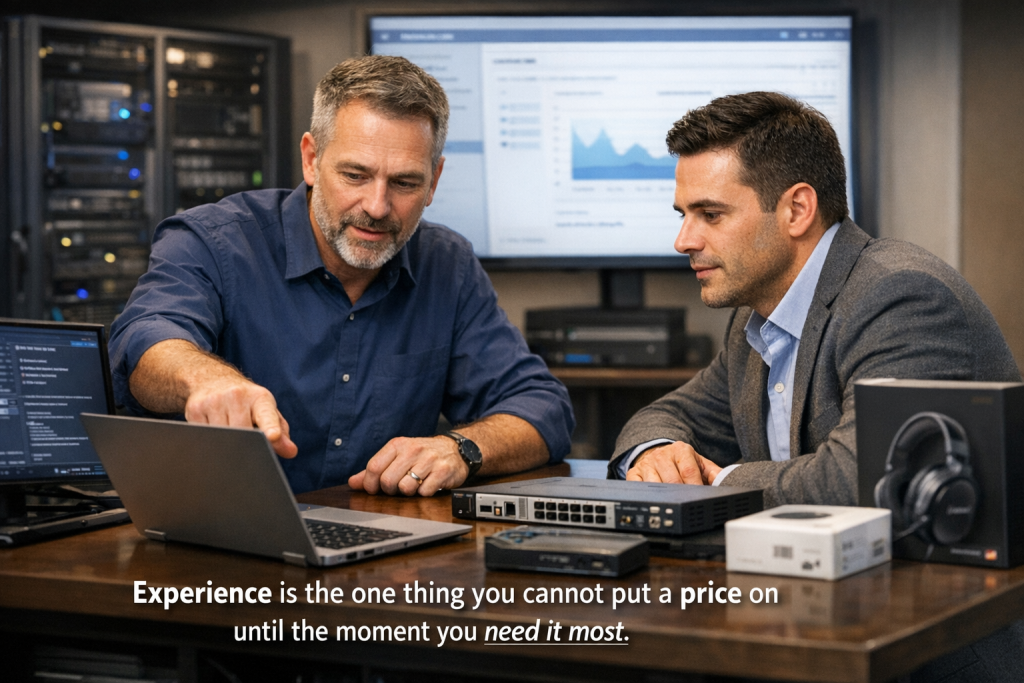
And experience, as it turns out, is the one thing you cannot find on a marketplace for less.
The Rewired MSP framework covers the full picture of how trust-based procurement builds stronger client relationships, reduces support costs, and creates the kind of MSP partnership that clients do not leave. If you want to go deeper on what that looks like in practice, the book is available on Amazon now.
Get your copy of Rewired MSP on Amazon today.
Frequently Asked Questions
Why does my MSP charge more for hardware than what I can find online?
Your MSP’s pricing reflects more than the product itself. That pricing includes vendor vetting, warranty verification, compatibility testing, supply chain reliability, and the accountability your MSP takes on when they recommend a product. A lower price online often reflects an older model, a limited or nonexistent warranty, or a product no one has tested in a managed environment. The difference is rarely about margin. It is almost always about experience and risk.
What is total cost of ownership and why does it matter for IT hardware?
Total cost of ownership refers to the full financial impact of a technology decision over its useful life. This includes the purchase price, installation, support costs, downtime caused by failures, warranty claims, and eventual replacement. A cheaper product that fails early or creates support issues frequently costs more in total than a properly vetted product purchased at a higher initial price.
Why do MSPs use standardized technology stacks?
A standardized technology stack is a defined set of hardware and software products that an MSP has tested, vetted, and approved for client environments. Standardization reduces compatibility issues, speeds up support resolution, simplifies upgrades, and allows MSPs to maintain reliable replacement inventory. It is one of the primary ways a good MSP reduces risk and long-term support costs for their clients.
What should I do before purchasing hardware outside my MSP’s recommendation?
Have the conversation with your MSP first. Ask them specifically why they recommend what they recommend and what risks exist with the alternative you are considering. A good MSP will give you a straightforward answer based on real experience with that product or that category. That conversation is exactly what you are paying for.
How does MSP procurement protect my business from supply chain risk?
MSPs with standardized supply chains maintain vendor relationships and replacement inventory for the products they support. When a vetted product fails, they can often source a replacement quickly because it is already part of their standard stack. When a client purchases outside that stack, the supply chain advantage disappears and sourcing takes longer, which extends downtime and increases cost.
What is the vCIO role in MSP procurement decisions?
A virtual Chief Information Officer serves as an independent technology strategist for the client. In the procurement process, the vCIO evaluates options based on business fit, lifecycle value, and total cost of ownership rather than vendor incentives or sales targets. This independence allows the vCIO to make recommendations that genuinely serve the client’s long-term interests rather than short-term cost reduction.
About the Author
Brent Lacy has spent nearly 30 years in the IT industry building and advising managed service providers. He is the author of Rewired MSP: Mastery, Scalability and Performance, vCIO Rewired: Virtually Conquering IT Obstacles, and Near Miss: Preventable IT Failures Threatening Your Business Security.
